Saturday, June 03, 2006

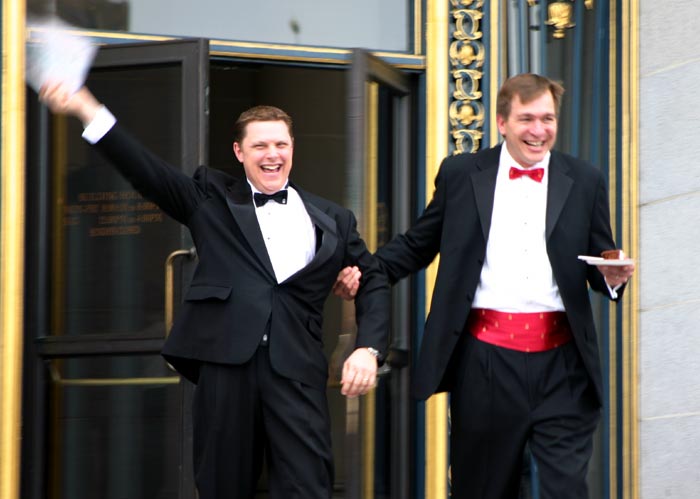
On the (so-called) Marriage Protection Amendment

The freedom to marry has long been recognized as one of the vital personal rights essential to the orderly pursuit of happiness by free men. Marriage is one of the "basic civil rights of man," fundamental to our very existence and survival.

-- Earl Warren, Loving v. Virginia


Liberty protects the person from unwarranted government intrusions into a dwelling or other private places. In our tradition the State is not omnipresent in the home. And there are other spheres of our lives and existence, outside the home, where the State should not be a dominant presence. Freedom extends beyond spatial bounds. Liberty presumes an autonomy of self that includes freedom of thought, belief, expression, and certain intimate conduct. The instant case involves liberty of the person both in its spatial and more transcendent dimensions....
“ These matters, involving the most intimate and personal choices a person may make in a lifetime, choices central to personal dignity and autonomy, are central to the liberty protected by the Fourteenth Amendment. At the heart of liberty is the right to define one’s own concept of existence, of meaning, of the universe, and of the mystery of human life. Beliefs about these matters could not define the attributes of personhood were they formed under compulsion of the State.”... Persons in a homosexual relationship may seek autonomy for these purposes, just as heterosexual persons do....

-- Anthony Kennedy, Majority Opinion, Lawrence v. Texas


Today’s opinion dismantles the structure of constitutional law that has permitted a distinction to be made between heterosexual and homosexual unions, insofar as formal recognition in marriage is concerned.

-- Anton Scalia Dissenting Opinion, Lawrence v. Texas


In God's intention, a meet and happy conversation is the chiefest and noblest end of marriage.

-- John Milton


And it came to pass, when he had made an end of speaking unto Saul, that the soul of Jonathan was knit with the soul of David, and Jonathan loved him as his own soul. And Saul took him that day, and would let him go no more home to his father's house. Then Jonathan made a covenant with David, because he loved him as his own soul....

-- 1 Samuel 18:1-3


Let me not to the marriage of true minds
Admit impediments. Love is not love
Which alters when it alteration finds,
Or bends with the remover to remove:
O, no! it is an ever-fixed mark,
That looks on tempests and is never shaken;
It is the star to every wandering bark,
Whose worth's unknown, although his height be taken.
Love's not Time's fool, though rosy lips and cheeks
Within his bending sickle's compass come;
Love alters not with his brief hours and weeks,
But bears it out even to the edge of doom.
If this be error and upon me proved,
I never writ, nor no man ever loved.

-- William Shakespeare, Sonnet 116 [previously quted in this context here]


...the arc of the moral universe is long but it bends toward justice.

-- Martin Luther King, Jr.
[photo source (via)]

Monday, May 29, 2006

Where to Start with Graphic Novels

In a recent email exchange, one of my cousins expressed an interest in reading more graphic novels. I offered to make suggestions, and he responded with the following:

Let me know which comics or graphic novels I should check out. I've only read the obvious(Watchmen, Dark Night, Sin City). I occasionally stumble into a comic book store, but get sort of overwhelmed with my ignorance and run out empty handed... I'd love to hear what you recommend.
Since this is an inquiry of general interest, I thought I'd post my musings on this topic here, where they can last forever to the enlightenment of future ages. Or at least the two or three people who might happen to stumble upon them while desperately googling "graphic".

By far the most important thing to say in this context, I think, is that there no longer is a general answer to this question: and that that is a good thing. You see, two decades ago, there were a few obvious answers -- because there simply wasn't a lot more that was both good and readily available. The medium was still arising out of its ancestors (comic books both mainstream and underground; comic strips; manga and bande dessiné; and other influences) and while one could point to older stuff, it wasn't generally graphic novels as such (by which I mean longer comics of serious intent), was usually hard to find, and wasn't very accessible, or simply not very good. So you pointed to the obvious stuff.

That isn't true any more. Thanks to the explosion of graphic novels -- new, reprinted and translated from other countries where these things have always been taken more seriously -- there now is simply a lot out there. At this point, asking 'what graphic novels should I read?' has become a question equivalent to 'what movies should I watch?'. There is no general answer to the latter question, not only because there is simply too much good stuff out there, but also because it depends on your taste. Where do you start with movies? 8 ½, Citizen Kane or Casablanca? Or with the latest blockbusters, the latest Oscar winners, the latest art films? Depends who you are and what you want.

So that's the most important thing to bear in mind. Graphic novels are a medium, and as such, there's stuff to anyone's taste -- and good stuff that is not to your taste, whoever you are. And, therefore, anyone can be at best only an imperfect guide for you.

Now, everything I've said before is true -- indeed, increasingly true. But it's only recently true, which means that there are still, to a greater extent, 'classics' that everyone should read -- simply because of the youth of the medium. So there are three books I'd recommend unreservedly to anybody. My cousin mentioned one above, Watchmen, which is not only one of the greatest graphic novels written, but is -- I'd say inarguably, save that so many people have tried to argue it -- the single greatest superhero story ever written, and a work which can be enjoyed even by those with no particular interest in or taste for the odder aspects of the superhero genre. So that's a good place to start. I'm assuming that we're all beyond the gosh-gee-graphic-novels-don't-have-to- be-about-superheroes-any-more stage, but since that association is still strong, we may as well point to Watchmen -- particularly since it is good enough for anyone to like.

Two other classics of the same stature should be mentioned here. The first, Maus (which is published both in two volumes, as Maus I and Maus II, and in a volume entitled The Complete Maus) came out (or at least the first half of it did) around the same time that Watchmen and The Dark Knight Returns did, and were one of the first wave of graphic novels to get and deserve wide and serious attention. And, like Watchmen, Maus is one of those works which deserves it. Because it too is so good that even if you have no particular interest in its subject area, you should read it and will like it. It is -- as I assume most people know -- a holocaust memoir, the story of the father of its creator, Art Spiegelman, and tells both the story itself and of the relationship of Art with his father. There can be a tendency to over-praise works on the Holocaust because of the importance of the subject rather than the quality of the work itself -- but this is very much not the case with Maus. It's an amazing book and everyone should read it.

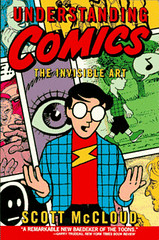
The other classic to mention is Scott McCloud's book Understanding Comics. It's a book of, essentially, art theory, talking about how comics works (which will tell you, among many, many other things, why the phrase preceding this parenthesis is, in fact, grammatically correct.) Art theory, but also itself comics -- sequential art with both words and pictures (to combine the two most famous definitions of comics.) And I always hate to describe it this way, because it sounds academic and dry and dull, but good lord is it anything but -- it's absolutely captivating and witty and engrossing and really wonderful, and, like Watchmen and Maus, I recommend it unequivocally to everyone, whether or not you have an interest in its subject matter -- which just happens, in this case, to be comics itself.

Okay, those three are foundational -- and, among other things, a very good sample of the diversity of the graphic novel medium: a superhero story, a realistic historical memoir, and a non-narrative nonfiction work. But where do we go from here? (The battle's done, and we've kind of won... sorry, wrong topic.)

Well, here all the stuff I said above about how it depends on your taste comes into play. Because there is such a diversity of material. So from here on, I'll try to describe things by genre or feel or type, and point you towards a few good things in each category.

Realistic fiction. The gold standard here is probably Chris Ware's Jimmy Corrigan. It's an extraordinary work, complex and rich and wonderful. The problem is that it's also an extraordinarily bleak, depressing book: Chris Ware makes Beckett look like a cheerful guy given to action tales. So while it's really, really good, it will not be to everyone's liking.

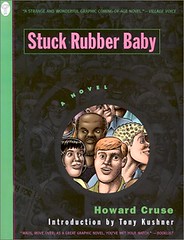
Fortunately there's a lot of other great stuff too. One of my personal favorites is Howard Cruse's autobiographical novel Stuck Rubber Baby, which I actually taught in my historical fiction seminar at Cornell this past year (twice, once each semester). It's the story of a white, gay man growing up in a southern city (a fictionalized Birmingham, Alabama) at the height of the Civil Rights Movement (and, therefore, before the Gay Rights Movement began in any but the most rudimentary fashion). It's absolutely terrific, although Cruse's drawing style take some getting used to.

Other stuff. If you like comedy, read Kyle Baker's Why I Hate Saturn. Will Eisner did a wonderful novel about life on the lower-east side back in the 1930's known as A Life Force. Craig Thompson's Blankets is a coming-of-age graphic novel. Alan Moore did a long historical novel about Jack the Ripper which is wonderful and sophisticated and every bit as violent and sex-filled as you'd expect a novel about a prostitute-killing serial killer to be (fair warning), called From Hell. There's a postmodern mystery novel (okay, I'm pushing the boundaries of "realistic fiction" here, but it's good) adapted from a prose novel by Paul Auster (and which I actually think is (gasp!) better than the novel, although the latter is quite good), called Paul Auster's City of Glass, by David Mazzuchelli. There's a early twenties, down-and-out-and-don't-know-what-to-do book by Alex Robinson called Box Office Poison that I liked a lot. Neil Gaiman, better known for his fantasy comics (see below), did some great more-or-less-realistic graphic novels with artist Dave McKean, Mr. Punch and Signal to Noise. I haven't read as much Love and Rockets as I should have (I'm working on it!) but most people who have read it think it's among the best there is; the two big collections are Locas by Jamie Hernandez and Palomar by Gilbert Hernandez.

Memoir and autobiography. Here I'm tempted to recommend Alison Bechdel's Fun Home on the strength of her ongoing comic strip Dykes to Watch Out For (for more, see here), but since I haven't read it yet, I suppose that would be irresponsible of me. (My copy's on order; ask me again in a week.)

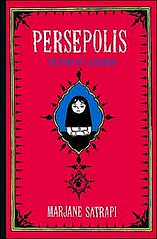
Okay, other stuff which I've actually, y'know, read. Marjane Satrapi's memoir of growing up in Iran, Persepolis, is wonderful. Samuel R. Delany (best known as an SF writer) did a marvelous, very brief memoir of how he met his (still-current, I believe) lover, Dennis -- who was homeless at the time -- called Bread and Wine. Katherine Arnoldi's The Amazing True Story of a Teenaged Single Mom has very simple art, but is a great story. Harvey Pekar has done very brief, slice-of-life pieces for many years in a comic known as American Splendor. Start either with the collection of works he did with cartoonist Robert Crumb, American Splendor Presents Bob & Harv's Comics, or his book-length work about the year he had cancer (co-written with his wife, Joyce Brabner), called Our Cancer Year. And there's a book by Chester Brown about his teenaged obsession with pornography called The Playboy which is quite good too.

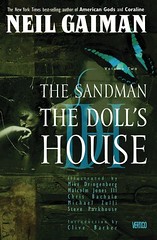
Science-fiction and fantasy. Here the place to start -- one that is almost as central as the works that my cousin mentioned -- is with Neil Gaiman's Sandman. The problem with Sandman, though, is that the first volume is distinctly inferior to the others (ten in the main series, plus four auxiliary volumes by Gaiman and various spin-offs by others). And while it's easy to say, yeah, yeah, I'm interested enough to get through that, you may end up doing what I did and reading the first and thinking 'ehh' and putting it down (in my case, for at least a year). So I recommend starting with volume two, The Doll's House. All you really need to know to do so is this: that there are seven beings, older than the gods and not worshiped by humans, named Destiny, Death, Dream, Desire, Despair and Delirium (and one other whose name is revealed later); and that Dream, the hero of the series, was recently held captive for seventy years, and has just returned to begin repairing his domain, the realm of dreams.

Grant Morrison has also written a bunch of wild SF; here I'd recommend starting with The Filth, since it's one volume and will be a good indication of whether you like his particular brand of lunacy. If so, you can go on to The Invisibles (seven volumes, the first is Say You Want a Revolution). Further good SF/Fantasy includes Brian K. Vaughn's thriller Y: the Last Man (seven volumes and still ongoing; the first is Unmanned). Alan Moore's Swamp Thing is a mix of horror and fantasy and some superhero elements, and is terrific; the first of six volumes is Saga of the Swamp Thing.

Superhero comics. My cousin mentioned The Dark Knight Returns, which is good, but which I wouldn't recommend to anyone without some prior interest in superhero comics and a bit of knowledge of Batman in particular. But if you are interested in this sort of thing, there's lots of good, recent stuff.

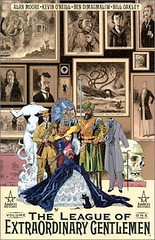
The first place to start is probably with Alan Moore's other superhero work, particularly the comics he published in his own line, America's Best Comics (and no other writer could get away with doing, under that name, an entire line of comics by one person. But Moore can, and did.) The League of Extraordinary Gentlemen (2 volumes, plus one forthcoming) is probably the most broadly popular; it's a series which explores the roots of the superhero genre in nineteenth century pulp fiction, teaming up Mr. Hyde, the Invisible Man, Captain Nemo and others. Then there's Promethea (5 volumes), which is my favorite: it starts off as a fairly standard superhero story but quickly turns into a lesson in Moore's own strange occult metaphysics.; Tom Strong (6 volumes, first is the best) is a deliberately retro exploration of the nature of superheroes; and Top Ten (2 volumes plus 2 auxiliary tales) is a police procedural set in a city in which everyone is a superhero.

Also noteworthy in the superhero category are many of the works of Grant Morrison -- start with Animal Man (three volumes, I've only read the last) and Doom Patrol (three volumes, more being reprinted), although he also did a run on X-Men if the movie has inspired you (more below). Further good stuff includes Kurt Busiek's Astro City (five volumes, still ongoing); Warren Ellis's Planetary (four volumes, one forthcoming) and -- less serious but lots of fun -- Warren Ellis's Authority (two volumes); and Brian Michael Bendis's Powers (I've only read the first few, but it's fun; a lot of his other stuff looks less interesting, though). There's a lot more where those came from, too, because while graphic novels have grown way beyond being just superheroes, it's still the dominant genre -- and while it probably passes the canonical Sturgeon's Law minimum of 90% crud (Sturgeon's law: "90% of SF is crud, but 90% of everything is crud"), there's still a lot of enjoyable stuff.

(Actually, my cousin mentioned comics he enjoyed as a kid -- Spiderman, Daredevil and X-Men -- so let me make some recommendations about those. First, as should be obvious, I don't think that those are the best stuff out there, even within the superhero genre. But I did enjoy Grant Morrison's run on X-Men, called New-X-Men and now collected in seven volumes (the first is called E for Extinction); it was followed by the almost-as-good run by Joss Whedon (of Buffy the Vampire Slayer fame), re-titled Astonishing X-Men, which is two volumes to date and is still ongoing; if you want to read X-Men, those are the places to start. Those also should be very accessible to those who enjoyed the movies and haven't read any other X-Men comics. Also good are the various volumes of Ultimate X-Men -- the first six by Mark Miller, the next two by Brian Michael Bendis, and then a bunch by Brian K. Vaughn. The classic Daredevil, of course, is by Frank Miller -- the best volume is probably Born Again -- I haven't read more recent stuff, although a lot of people like Brian Michael Bendis's recently-concluded run. Spiderman isn't as good, at least I don't think so, but if you want to read it the best thing to seek out is probably Brian Michael Bendis (yeah, the guy writes everything), Ultimate Spiderman.)

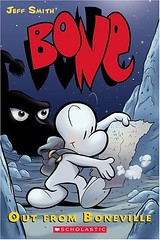
For kids. Wait, do kids still read comics? Do kids still read? Never mind. The following stuff is good for adults, too. (Phew!) The best that I know of, bar none, is Jeff Smith's Bone. This was originally nine volumes, was briefly available as the one-volume Complete Bone, and is now being reprinted as nine volumes again, this time in color (it was originally black and white); the first volume is Out From Boneville. Bone is a fantasy story -- think Lord of the Rings with a lot more comedy and humor. It's wonderful. If kids want to read about superheroes, a good teenage series is Brian Vaughn's Runaways, five volumes to date, the first is Pride and Joy.

Summing up. This post may have made you feel like my cousin: overwhelmed by choices. So let me sum up what I've said. Everyone should read:

Art Spiegelman's Maus

Alan Moore's Watchmen

Scott McCloud's Understanding Comics.

Then, by genre, I'd recommend:

Mainstream Fiction: Howard Cruse, Stuck Rubber Baby

Memoir/Autobiography: Marjane Satrapi's Persepolis

Fantasy & SF: Neil Gaiman, Sandman -- start with volume two, The Doll's House

Superheroes: Alan Moore, The League of Extraordinary Gentlemen

For Kids & Those Who Were Once Kids: Jeff Smith, Bone: Out From Boneville

-- and I'll leave it at that lest I overwhelm you again. But remember that just because you don't like one, it doesn't mean you won't like others: it's becoming a whole world, and there's stuff for every taste.

In fact, what's really sort of amazing, I think, is that I haven't even begun to scratch the surface here -- there's more great stuff in every category, along with lots of categories I haven't even mentioned. Some people are going to say that I've omitted the very best work -- and they might be right (there's a lot I haven't read; in many ways the biggest entry barrier to graphic novels is money, since they cost a lot and read comparatively quickly (although the best can be reread many times with increasing pleasure, as Gene Wolfe said of great literature) -- but that's another post.) I haven't gotten into much non-fiction, or mysteries or any of the many other genres that are out there. There's a whole universe of stuff translated from the Japanese (where comics, known as Manga, have long been far more popular and respectable then they are here) about which I know very little, not to mention stuff from the French (where similarly comics are more respectable, known as bande dessiné) and other languages. There are collections of daily comics strips, which aren't quite graphic novels but can be wonderful. And on and on and on.

Other people's viewpoints. So seek out other people's views, too. For review sites, you could start here or here or here or here or here. Or, for best-of lists, you could start here or here or here or here or here. I don't fully agree with any of those viewpoints, of course -- that's the point! There are a lot of good review sites out there, with different views than mine.

Enjoy!

Saturday, May 27, 2006

X-Men: the Last Stand: A Review

(First half spoiler-free; I'll post warnings before I include spoilers.)

Ehh. The first two X movies managed to capture the best spirit of Marvel superhero comics -- weeding out what doesn't work and doing very well what does. When I saw the first one, I remember sitting there as the movie went on, astonished that they hadn't messed it up yet. But they didn't. They got through two full movies doing well.

But not three.

What made the first two movies work so well -- just like what made the first two Spiderman movies work, what made Batman Returns work -- is that they took them sufficiently slowly. They built the characters, made them real and likeable. (Which, after all, is what Marvel comics legendarily did in the early 60's.) They remembered that what makes these movies work is, first and foremost, the people. Oh, that wasn't all. They also had smart stories and well-crafted screenplays, good special effects and all the rest. But real people behind the powers was the sine qua non. Whereas the third X-Man movie made precisely the same mistake that the Batman franchise did after the first two movies.

Don't hire the director who did such a good job for you on the first two films back to do the third?

-- well, er, yes. That too. But what I was thinking of was this: they forgot that people make the film. They crammed it full of fights and special effects, to the exclusion of all else.

This time out, they didn't work on developing an interesting story; they didn't work on writing good dialogue; they didn't work on capturing the sense of realism particular to superhero comics, namely, a background of fantasy but with realism in the foreground. And, above all, they skimped on the character moments, editing what they had down to weak lines that talented actors struggled in vain to make meaningful, revealing -- other than silly.

All of which is not to say I didn't like it. I'm an X-Geek from way back: I enjoyed it tremendously. But unlike the first two films, which captured what I liked about the X-Men comics back in my youth, this film captures the most common current experience of X-fans: seeing something they love done badly, enjoying it because of old affections for the characters (and simply at the level of spectacle), but knowing all alone that what they're watching ain't good.

So if you have a deep affection for the X-Men, whether from the comics or the cartoon or the first two movies, go: you'll have fun. Or if you want a silly, stuffed-to-the-gills action movie with good special effects but little else to recommend it. But if you liked the first two films and wonder if the third lives up to them, the answer, sadly, is no.

(If you do go see it, though, stay through the end of the credits: there is a brief scene which follows them.)

(Spoilers for what characters are included begin here.)

They made some obvious mistakes. One is simply including too many characters (which apparently Joss Whedon warned them about while the movie was in production (sorry, no link, I forget where I read that.)) I mean, sure, as an X-Geek from way back it was a lot of fun to see the Beast get a major role, to see Kitty Pryde upgraded to the level of Iceman and Rogue from the first two movies, to see real glimpses of Colossus and Angel and others. But it was too much; they didn't have time to develop them. Oh, I laughed when Beast said "Oh my stars and garters" -- one of his trademark lines from the comics. But it was the fun of recognition, not fun on its own terms.

(Spoilers for what the major stories are, and the first third of the movie generally, begin here.)

But the big problem was that they tried to do two stories. They tried to do both the Dark Phoenix storyline and a storyline based on the Cure (from Joss Whedon's still-ongoing run on the comics). And it was simply way, way too much to do. Oh, even with that decision they could have handled it a lot better than they did -- sacrificed some of the more gratuitous fight scenes. (Such as the danger room scene in the beginning -- oh, sure, fun to see a fastball special and a sentinel (or at least the head of one). But not relevant.)

It was too much. And it meant they didn't do either properly. I think that, in the end, they skimped more on the Dark Phoenix storyline than on the Cure storyline -- the former was a shell of what it should have been, the latter almost worked. But almost not because of interference from Dark Phoenix per se, but rather because the entire movie was so busy that it became -- almost -- boring. (If I wasn't an X-fan, I probably would have been bored; as it was it was fun but silly.)

I think I get why they did that. The problem is that there isn't a role for Magneto in the Dark Phoenix storyline.* And Ian McKellen's a major actor, and the Professor Xavier - Magneto dynamic was one of the cores of the first two films -- so they put in the cure.

What they should have done, I think, was just do the Cure. That would have let them complete the Professor X - Magneto trilogy with its focus on mutant rights and all that. Let Jean stay dead for this film, and then if you do a fourth film do the Dark Phoenix saga and leave Magneto out of it. Use the extra time in the film that you'd get from chopping out the Dark Phoenix parts to slow the thing down, bring back the character arcs, recapture the feel that made the first two movies work so well.

But they didn't. And what they got was, ultimately, a disappointment.

(I should say that it's not that I thought the first two films were the greatest films of all time or anything. It's just that they worked extremely well on their own terms: they did what they were trying to do -- be good Marvel superhero stories -- quite well. Just as the first two Spiderman films did. Just as Batman Returns -- and the first Batman movie -- did. (Well, okay, those two did a lousy job of being Marvel superhero stories. But they did a good job of being DC superhero stories.))

Those are the major points I wanted to make. The only other comments I have are random thoughts and quibbles.

(Spoilers for the ending of the film begin here.)

Why in the world did Logan kill Jean? Why not just stab her with one of the cure needles? A plot hole almost as big as the potholes on our street (and that's saying a lot, believe me). I know why it happened: they were following the source material -- at least very roughly -- and the Dark Phoenix storyline was twenty-odd years before anyone thought of the cure. But in this movie it was a pothole-sized plot hole. Even worse, it was an easily avoided one: just show Jean disintegrate the cure needle as Logan's trying to approach her, leaving him no other choice. (Except a fastball special with Leech. But I suppose they couldn't risk her zapping him before he got close.)

Using Leech as the source of the cure was a good touch: it gave a very reasonable explanation for how they came up with it (without invoking the parallel universes and alien races of the comic) and also a very good reason why it won't stick around if they decide to make a fourth movie (or if, as is rumored, they make a solo Wolverine movie): there's no more cure because the kid's escaped.

Usually superhero movies are a bit more brutal than pre-Watchmen comics: back then, superheroes were squeamish about killing people and I believe that, in the comics, Wolverine still does less of it than in the films (which, given the level of violence we're used to in action movies, doesn't even register -- and doing less would seem downright odd). But Phoenix, of course, did many orders of magnitude more harm in the comics than she does here.

Bringing back Professor X was totally obvious; I saw it coming as soon as they body with no mind was mentioned. But it was -- as one of the people in the movie theater shouted at the screen -- lame. (I think there should be a limit of one resurrection per movie (unless you are doing a movie specifically about resurrections.)) Moira McTaggert was a perfect example of their trying to cram too much !@#$% stuff in, incidentally.

Okay, that's all I have to say. A lot of fun, really. But not good, even on its own terms. And it's such a pity, since they proved it possible twice, and I was really hoping they'd go for three.

(Update: Minor edits throughout.)

----------------------------------------
* Although if you had to have one, you'd have him play the role of Sebastian Shaw, with Mastermind being a lackey rather than rival. But they don't do that or anything like it.

Friday, May 19, 2006

Motivation

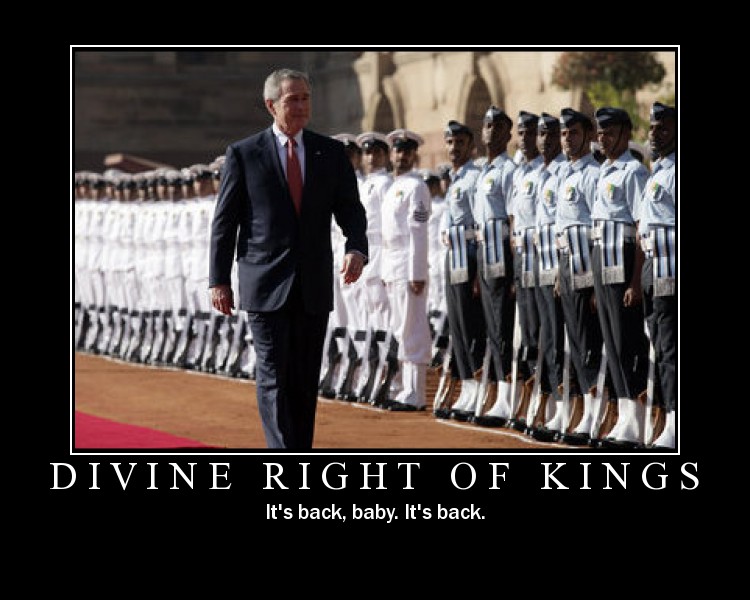
You know those motivational posters you see at offices? Well, via boing-boing, there's a tool which allows you to make your own. For example:


(Click images for larger versions.)

Monday, May 15, 2006

Were you ever a Marvel Zombie?

You know who you are. (If you don't know, then you almost certainly never were.) You read a lot of Marvel comics. It didn't have to be for a long time. But it had to be a lot of them. D.C. doesn't count. Picking up X-Men just because Joss Whedon's writing it doesn't count. But if you know who the Silver Surfer is, if "Juggernaut" makes you think of a big, mutant brother of Professor X rather than whatever ordinary people think of when they hear that word, then this list by Andrew Wheeler, of the 50 Best Marvel Comics Characters, is very, very funny. As Alan David Doane (from whose blog I got the link) said, it's the descriptions that make it worth while. For example:

THE BEAST. Here's the subtle genius of Beast. He looks like a giant, fanged, blue-furred ape creature. But he's actually a brilliant scientist, a great wit and an intellectual. It's awfully clever. He's a reupholstered Teddy Ruxpin that's been loaded with Encarta. On the one hand, he'd make an eloquent dining companion. On the other, he'd make a terrific rug.

...and if that isn't funny to you, then you probably don't know who the Silver Surfer is, and you won't find the rest of the piece funny, either. Don't click the link. For the rest of you...

In other news, I know I haven't posted for a while. It may be a while more. April may be the cruelest month, but for academics with grading, May comes pretty close. I'll be back when I can. In the meantime, here's an image of Fin Fang Foom:


"...he's a giant lizard in purple pants. If you don't understand what makes this great, you probably shouldn't have any contact with superhero comics." -- At least ones not written by Alan Moore. Stick with other types of comics.

Monday, May 01, 2006

Best of the Blogosphere, Part 1: John Holbo reads David Frum

(First in an occasional and entirely whimsical series. (Update: Later entries here.))

Bloggers, I am convinced, have done some damn fine writing in the past few years. The nature of the medium being what it is, however, the products of the past are too often swallowed up in the same void that devours day-old newspapers and month-old magazines. On the other hand, the nature of the medium also means that the rescue is easy: the material is there. One just has to link to it.

So, from time to time -- and I really have no idea how often, I might not do another for year, I might do another tomorrow -- I want to link to an old post that is worth reading -- indeed, worth rereading if one has already read it. To make sure that instant acclaim is not the standard, I will limit myself to posts at least a year old. (I know, I know: a pretty short time to ensure classic status. This is the internet, people. Way of the digital world.)

And, thanks to the most recent post by Michael BĂ©rubĂ© (most recent as of this writing), we have our first contender. Dr. BĂ©rubĂ© links to an old post by John Holbo which I really liked when I first read it. I just reread it: it really holds up. So, the first official Attempts Best of the Blogosphere™ post is: John Holbo reads David Frum in "Dead Right".

The basic set-up is this. Thanks to a recommendation by Josh Marshall (the link from Holbo's post is broken; use that if you want to read Marshall, although it's really just a passing comment) John Holbo went and read David Frum's Dead Right. Holbo then discusses Frum's philosophy, filled with ample and not-terribly-clearly-formatted quotations (the latter is my only gripe about the post really). Holbo decides that Frum hasn't really thought his underlying political philosophy through very well, and thus he

...attribute[s] rather outrageous views to Frum, not because I actually think he holds them but because I think he does NOT. These outrageous views are the views he WOULD hold if, perchance, he upheld and investigated only the most immediate ramifications of the bits and snippets of philosophy he espouses.
Hilarity ensues. But the insightful sort of hilarity that really good, biting comedy gives you. -- Really. Go read it.

The post exemplifies a few of the literary quirks of the nascent blogosphere, and I thought I might mention them briefly. First and foremost, it features a lot of very long quotations -- clearly in a copyright-allowable-way (being criticism, and only a snippet of the entire book), but in a way that in a traditional formal essay would seem excessive. But this isn't done because Holbo has nothing to contribute. On the contrary: he has a lot to say, but wants to A) be fair (in a fashion) to Frum, and B) let Frum hang himself by his own words.* (The Donner Party comes up. 'Nuff said.) This is a style of reading which, when done in its entirety to a short piece is referred to in the blogosphere as fisking. This isn't that -- he's only doing a tiny bit of a full-length book. But it is done with all the snark a good fisking entails... but having a dead serious intellectual point behind it (as, indeed, the best snark does).

I really wonder if David Frum ever read it. Part of me is inclined to doubt it, since he hasn't given up being a pundit and devoted the rest of his life to standing on corners and cleaning car windshields for spare change, which would be a reasonable response to this essay, I think. Nor does a quick google bring up any indication that he did -- just other people praising Holbo's post. But part of me thinks he must have read it. It was too widely passed around at the time for him not to have caught wind of it. So what did he think? What could he possibly have thought?

Goodness knows. But you can find out what you think: read the post!

Much Later Update: I just recently found out (via this thread) that John Holbo actually wrote a follow-up post to the one I highlighted here. Like many sequels, it's not as good as the original, but still, if you liked the first, it's worth taking a look at.

-------------
* Although at various points he quotes a full paragraph from other writers too. The idea here, I take it, is quite simply that the point has been made well, so why not simply quote it? This isn't written for money or tenure or anything like that, but just to convey ideas. So there's no reason not to simply rely on the words of others if they do the job well.

Thursday, April 27, 2006

Books & Cartoons to Watch out For

One of my favorite cartoonists (which, granted, is a long list) is Alison Bechdel. Her major work up to this point has been a biweekly comic strip called Dykes to Watch Out For. The first few years of this strip were individual cartoons which, frankly, I don't find all that interesting. But in 1987 she introduced some regular characters and made the strip an ongoing serial -- "half op-ed column and half endless, serialized Victorian novel" Bechdel calls it. And it was at that point that it really took off. It's been collected in ten to twelve books so far, and I highly recommend checking it out.

Ten to twelve? Why not be more precise?

I hear you cry. Well, the first of her books, Dykes to Watch Out For, collects cartoons and strips from before the ongoing serial (but which were -- confusingly -- already running under the "Dykes to Watch Out For" name) -- so whether it counts or not is arguable. The ongoing serial strip begins in the second book, More Dykes to Watch Out For. Honestly, however, the strip gets better as it goes along -- both the narrative complexity and Bechdel's drawing improves dramatically. I'd recommend beginning with the third book -- New, Improved! Dykes to Watch out For -- but if your drawing-standards are exacting you might want to skip ahead a few volumes farther -- say, to book five, Spawn of Dykes to Watch Out For (although her drawing has continued to improve as time goes on).

The one other odd-woman-out so far as the collections are concerned is The Indelible Alison Bechdel: Confessions, Comix, and Miscellaneous Dykes to Watch Out For. This isn't one of the standard collections. It includes a lot of Bechdel's other cartoons (of varying quality). It also includes what are, basically, outtakes from the regular strips: the strips from a monthly calendar she produced for a number of years, and other oddities like that. It's a fun book, but read the main sequence first.

So: the main sequence of the serial is collected in ten books; the other two books with 'Dykes to Watch Out For' somewhere in their title are secondary, but bring the number to twelve. See?

You also don't have to buy the books to try the strip. Most of the recent strips are on the web. For a long time they were run on the web site Planet Out, and they have an archive of them here -- containing strips #303 - #480. (Actually, although they don't have links to them for some reason, three more strips -- 481, 482 and 483 -- are also online there.) In the last few months, however, Planet Out has -- for some inexplicable reason -- stopped running the strip. The last few entries have been posted on Bechdel's Flicker photo stream as she looks for a new online home for the strip.

So you can use the online archives to see if you like the strip -- although, be warned: it is an ongoing story, best read in large chunks, and you'll be coming in right in the middle of a lot of story lines, without the helpful recap that Bechdel includes at the opening of each of the collections. I, personally, really prefer reading them on dead trees. But it's a good way to sample, I suppose. For a sample of the sample, here are a few personal favorites of mine: 304, 374, 420, 434. Although, to repeat: it really works best in much larger chunks -- in the end, it's really one long work (with a slightly shaky artistic beginning -- and it is far from the only comics for which this could be said.)

But. The key words in the sentence "Her major work up to this point has been a biweekly comic strip called 'Dykes to Watch Out For'" are "up to this point". Because her first full-length graphic novel is coming out in two months or so. It's a memoir, titled Fun Home: A Family Tragicomic, and based on the publisher's description it looks like it's largely about Bechdel's relationship with her father. All I've seen of it so far are the two sample panels that the publisher includes on the page. But I suspect that it may be Bechdel's best work yet, surpassing even her wonderful strip.

You see, in many of her later collections of Dykes to Watch Out For, Bechdel includes, after the regular strip, a "novella" featuring the major characters in a longer story (one which is usually referred to, but not narrated, in the biweekly serial) -- examples have included the birth of one of the main characters' child; a hectic day on which several of the main characters all move houses/apartments; a retrospective about how the characters met; and the story of a fundraiser held to help the bookstore run by one of the main characters (and worked in by several others) stay out of bankruptcy. And I've always thought that these novellas are the very best of the work -- that the greater length really allows Bechdel to shine.

Now, granted, I will dearly miss Mo & all the rest -- they're great characters, and some part of me would have preferred that Bechdel try a full-length novel about 'em rather than a memoir. But even so: it sounds like an extraordinary story, and I bet that the extra length will really allow Bechdel to do some fascinating stuff. (It's also more color-full than her normal work: instead of black-and-white, it will be two-color, i.e. blue-and-black-and-white, which is actually a wonderful look, I think, which has been used to good effect by many cartoonists.)


Anyway, it should be coming out some time soon. Watch out for it -- I know I will be. In the meantime, if you haven't read it before, check out Bechdel's ongoing strip.

[Update. I've been meaning to post a comprehensive review, but it's looking like I won't get around to it, so let me sum up and say that Fun Home is absolutely terrific, a truly marvelous book, and that I recommend it unreservedly to everybody.]

Wednesday, April 26, 2006

Buying Books Online: Links and Notes

There are some things that one just assumes everyone knows. I've worked hard at learning not to do this over the years, but I still have a long ways to go (and I don't really ever expect to get all the way there). Chatting with a newly-made friend today, I found out that she didn't know about all sorts of online resources to buy books with that I sort of assumed everyone knew about. So here are a few links I know of that I find helpful when shopping for books. If anyone knows any I left out, please leave them in the comments!

The first and most basic tool I use are two sites which themselves aggregate other online search engines. There are more than these two sites, but in my experience checking too many one hits diminishing returns, since they all check more or less the same databases. But there isn't complete overlap -- sometimes one will have a surprising hole (e.g. not finding all editions of a book but just some, not finding a book on some site that the other metasearch engine will find it on, etc), so it's worth checking more than one. So I use these two:
http://www.allbookstores.com
http://www.anybook4less.com
These sites aren't perfect -- the errors mentioned above will sometimes occur on both -- but in general they do a fairly good job, I think.

Most of the rest of the sites I know of are ones which those two will point you towards. But still, for anyone who wants to check them directly, there are a number of sites which allow you to search many used book stores across the U.S. (and, often, in England & elsewhere -- pay attention to where it's coming from, as it may affect shipping time and/or price!). The biggest of these, I believe is:
http://www.abebooks.com/
--but another one is:
http://www.alibris.com/
And Amazon.com, of course, does the same thing, as well as selling you new books (and barbecue grills and underwear and probably short-range missiles). Finally, while not strictly speaking just for used books, a lot of used books appear on:
http://www.half.ebay.com/

The other thing to take into account, of course, is shipping cost. Most of these sites will give you a discount if you buy more than one book from the same store (i.e. the same actual, physical used book store, not just the same online portal) so it's worth searching around to see if you can combine books. In general, abebooks has somewhat higher shipping prices than alibris, which in turn is a bit higher than half.com; and if you find a book on one, it's worth checking the others since the same copy is often listed on multiple sites. On the other hand, I often find that ordering books from multiple stores is cheaper than combining orders, even factoring in multiple shipping costs.

For new books, overstock.com has Amazon-like prices on a lot of things, but only charges $1.40 per book for shipping, so if you're buying under $25 (the amount at which amazon will ship for free), it's worth trying that. In contrast, ebay often has outrageous shipping prices -- a lot of ebay sellers seem to fold a lot of their actual merchandise price into their shipping cost (presumably to hide it when sorting ebay by price or on search engines such as the above, or simply to try and sucker people who don't pay attention), so pay particular attention when buying books on ebay (this is even aside from the auction factor -- I'm talking now just about the ebay "stores" which sell you things immediately.)

Those are some of the web sites I use. Again, if anyone has any others, please leave them in comments!

Thursday, April 20, 2006

Talking Blogging Heads

File under 'everyone is blogging now': David Byrne blogs -- yeah, that David Byrne. (via)


Update: When I posted this, it had escaped my attention that there really was something called "blogging heads" -- or, rather, BloggingHeads TV. David Byrne isn't involved in that, though.

And as an addendum to the "everybody's blogging" list, you can add John Crowley.

Wednesday, April 19, 2006

History Might Be Kind to Bush

Now that's a headline that I suspect my at-the-moment-purely-hypothetical regular readers never thought they'd see from me -- and one which, with one possible exception (hi, Uncle John!), they would all object seriously to. But while I admit second place to no one in my horror at the damage that the Bush administration has done to my beloved country, I think that Bush, the ultimate gentleman's-C-student, might get away with less blame than we, now, would think warranted. Let me explain.

The thought arose because I read two excellent essays back-to-back. The first was the recent Rolling Stone article by the fine historian Sean Wilentz considering whether Bush really is the worst president in U.S. history. His answer, it will probably surprise few to learn, is yes. Or, more precisely:

No historian can responsibly predict the future with absolute certainty. There are too many imponderables still to come in the two and a half years left in Bush's presidency to know exactly how it will look in 2009, let alone in 2059. There have been presidents -- Harry Truman was one -- who have left office in seeming disgrace, only to rebound in the estimates of later scholars. But so far the facts are not shaping up propitiously for George W. Bush.

I think a fair summary of his arguments might be that while the race is far from over, at the moment Bush is well ahead with no obstacles between him and the finish line. If any conservatives wish to object, they should at least consider Wilentz's considered argument and explain why they don't agree. He has a lot of evidence on his side. He's very persuasive. He persuaded me. (Although admittedly I already thought so.)

So why might history be kind to Bush? The answer, I think, lies in the two types of problems we face at the moment.

Now, I say "two types", but -- of course, of course -- there really are not two types, but a whole spectrum ranging from one extreme to another, quite possibly a multi-dimensional spectrum at that, one with wormholes by which problems on one side can leap instantly to the other and bridges which draw seemingly separated problems into a single whole. Granted. But of course the whole point of simplifications is to help us think through ungraspable complexities, and I think there's some use to this one, so bear with me.

The first sort are problems which we either would not have had had Al Gore ascended to the presidency which he had rightfully won or -- shading out on the spectrum -- which we might have made progress on with democrats in charge. The war in Iraq, the disastrous deficit, the erosion of long-held civil liberties and most of the other nearly-uncountable damages of the Bush administration fall in the first half of this category. The long-term issue of Jihadism, the issue of basic civil rights for our gay and lesbian citizens and the health-care crisis are (although this is category is harder to speak with confidence about) in the second half -- problems which Gore would at the least have quite clearly been better on, and problems which, had mainstream liberal thinking been pursued (respectively: 1) Get Osama without getting sidetracked, work on locking down nukes and other dangerous weapons, court rather than inflame moderate Muslim opinion; 2) just give them equal rights damnit; 3) single-payer) might well have been more-or-less solved. Of course the political Gore was a cowardly creature, hardly the courageous figure that emerged after his loss, and of course he would have had a hard-right Republican congress (and VP) to deal with, all of which would have limited his options. But there would have been hope.

And, frankly, on these issues there still is a great deal of hope. Iraq is likely going to be a horror for a generation to come, blood which will forever saturate Bush's hands, but America might well extract itself from that situation soon after Bush's term -- little consolation to the people of Iraq, but some to us. As for all the other problems, I have high hopes that the present full-scale meltdown of the all-conservative government might just possibly lead to a resurgence of muscular American liberalism, which might actually make some progress on them. So on these issues we can, at least, hope -- and fight to make hopes real.

But then there are the second set of problems -- problems which no mainstream American political thinking has any reasonable answers for. Problems which even when given lip service by the left, there is little chance of achieving anything on in the foreseeable future. These are the problems that make me think that we are living in the period of the Decline and Fall of the American Empire -- if not of our civilization. I am, I know, a pessimist, and given to apocalyptic thinking. Nevertheless, the words of Hari Seldon often ring in my ears:

The appearance of strength is all about you. It would seem to last forever. However, Mr. Advocate, the rotten tree-trunk, until the very moment when the storm-blast breaks it in two, has all the appearance of might it ever had. The storm blast whistles through the branches of the Empire even now. Listen with the ears of psychohistory, and you will hear the creaking.

What problems are these? Well, there are many, and detailing them is more than I can do here and now. So let's just take one: global warming.

Global warming, Noble Reader, is a serious !@#$%ing problem. Scientists are increasingly convinced that we may hit a "tipping point" at which beyond efforts to mitigate it will be, frankly, too late. Al Gore is reportedly saying in his new movie that we may have only a decade to act before reaching that point. Some scientists are saying we may not even have that long -- that we might already have reached it. (You won't hear too much of that, because people tend to want to inspire action -- since, after all, we can't be sure that it's too late. But the whispers are there, if you listen.)

This is where the second essay which I read comes in. It's a blog post by Brad Plumer (via), who talks about what would be needed, practically, to slow global warming -- and how, while it might well be technically possible, is currently beyond the political pale -- "the goal looks attainable in theory, but in practice may be far out of reach," in his words. Simply because of the level of change in our society -- and in every society, worldwide -- which would be required.

And the actual results could be disastrous. -- I haven't the heart, right now, to go into the details. But this could be an epoch-making change in human history -- even apart from fears of peak oil, or any of the other large-scale problems that seem to bear down on us.

It seems likely -- or, as Dr. Wilentz might put it, "there are too many imponderables still to come... to know exactly... but so far the facts are not shaping up propitiously" -- that our era will seem in retrospect to be one long, slow-motion disaster, where ecological damage accumulated, and we collectively fiddled as our planet burned.

In which case Bush might actually get off easily. After all, while the Democrats would clearly be better on Iraq, on terrorism, on the economy, on health care, on civil liberties -- on a whole host of issues -- it seems unlikely that the corporate-beholden party could have done enough on global warming to make a real difference. Oh, they might well have pushed forward with Kyoto -- if the Republican congress would have let them. But even Kyoto was just a start: and it seems unlikely that they would have done more.

(Maybe -- maybe -- Al Gore, who has cared about this issue more and longer than almost any politician of national reputation, would have made it the defining issue of his presidency, had he secured it, as he has of his non-presidency. But he certainly didn't run on it. And, now, we'll almost certainly never know.)

In this case, Bush is likely to be remembered as simply one more disastrous leader who failed to lead. Oh, sure, worst than most -- probably worst than all. But who remembers which of the late Roman emperors was the worse? It is the vast rush of decline, not the short-term problems of any particular rule, that we recall. The Iraq war will be seen as simply one of the more egregious examples of the global tribulation that energy problems caused; the U.S. budget deficit will be seen as the almost-inevitable consequence of a global empire of military bases; signs of theocracy will be seen as the expected reaction to a declining civilization. Bush will fade into the background of horror -- a large figure in it, but still simply another one.

Bush, in short, might be saved from being damned by history because we might all be judged, collectively, so harshly that any individual looks small in the overall picture. Bush might be saved because the genuine disasters of his rule might fade into the background of larger and more permanent disasters.

But not to worry. If we assume Bush is, at this point, shooting the moon (as in the game of hearts), and -- figuring he can't possibly be good, at least trying for first-place in the worst-ever sweepstakes -- there is hope for him yet. At this point Bush looks like he might simply fade into the background of general waste and destruction. But if he goes ahead with his rumored plans to start an unprovoked, aggressive nuclear war against Iran, I suspect the consequences will be dire enough that they will stick out even amongst the general problems that future historians will see. Or if his utterly reckless disregard of actual U.S. security, combined with his active pissing off of the entire world, particularly of the Muslim world, lead to another devastating terrorist attack -- even, to fixate on one of my most serious and longest-running nightmares, a nuclear terrorist attack -- then that, too, will vault him over the top of the genuinely awful. So there is -- after a fashion -- hope for Bush yet.

For the rest of us, I'm not so sure.

More Iran Links

Since I published my first two posts on the possibility of Bush attacking Iran, lots of people have said good stuff on the topic. Here are links to some of what I've seen, read and thought worth reading.

• Matt Ygelsias makes the basic case against war.

• The Union of Concerned Scientists has an animation explaining why nuclear 'bunker buster' bombs are likely not to work. (via)

• Billmon followed up his first post with a lot more on this topic; in particular This is Not a Drill, The Flight Forward and The Spiral Conflict.

• Glenn Greenwald notes that Bush thinks he has the authorization to attack Iran and talks about how the script for Iraq is being run again without any authorization in the aptly titled 'Lucy, Charlie Brown & the Football'.

• File under 'great minds think alike': both Glenn Greenwald and Billmon have written about right's use of the Neville Chamberlin metaphor.

• Digby speculates on whether Bush has already covertly begun the war; Majikthise, in contrast, speculates that the current retired general's rebellion aginst Rumsfeld might be an attempt to prevent the war. Digby also reminds us of the connection to neoconservative beliefs.

• Arthur Silber in anger and despair: Morality, Humanity and Civilization: "Nothing remains...but memories" and Lunatic World.

• William Rivers Pitt is scaring a lot of people with his essay about Iran's blowback capacity. Read and see why.

• Paul Krugman. 'Nuff said.

• Finally, here's something funny to chear you up after reading all that.

(Update: links added.)

Wednesday, April 12, 2006

"What if we started a nuclear war and nobody noticed?"

For a long time, Billmon was hands-down my favorite blogger. Nowadays he's been more or less on hiatus, save for the very occasional posted quote. But recently he posted a long piece on Hersh's reporting on Bush's war planning, and it is really worth a read. He begins by wondering why it hasn't attracted more attention --

...I've been at least a little bit surprised by the relatively muted reaction to the news that the Cheney Administration and its Pentagon underlings are racing to put the finishing touches on plans for attacking Iran – plans which may include the first wartime use of nuclear weapons since Nagasaki.... Even by the corrupt and debased standards of our times, this is a remarkable thing. The U.S. government is planning aggressive nuclear war (the neocons can give it whatever doublespeak name they like, but it is what it is); those plans have been described in some detail in a major magazine and on the front page of the Washington Post; the most the President of the United States is willing to say about it is that the reports are "speculative" (which is not a synonym for "untrue") and yet as I write these words the lead story on the CNN web site is: "ABC pushes online TV envelope"...

-- adds a few remarks on why we should take this seriously, and then goes on to speculate how it might be received by the U.S. public:

Never again would American rulers (or their foreign counterparts) be able to hide behind the comfortable fiction that the United States is just primus inter pares – first among equals. A country that nukes other countries merely on the suspicion that they may pose a future security threat isn't the equal of anybody. America would stand completely alone: hated by many, feared by all, admired only by the world’s other tyrants...

[But] It’s entirely possible the near-term consequences wouldn't appear as cataclysmic as you might expect from such a world-shaking event – except, of course, for those poor souls unlucky enough to be living near or downwind from one of Iran's suspected nuclear weapons facilities... But barring another 9/11, or a worldwide financial meltdown, the day after a nuclear strike on Iran might not look that much different than the day before, at least to the folks back home. ...

What I'm suggesting here is that it is probably naive to expect the American public to react with horror, remorse or even shock to a U.S. nuclear sneak attack on Iran, even though it would be one of the most heinous war crimes imaginable, short of mass genocide. Iran has been demonized too successfully – thanks in no small part to the messianic delusions of its own end-times president – for most Americans to see it as a victim of aggression, even if they were inclined to admit that the United States could ever be an aggressor. And we know a not-so-small and extremely vocal minority of Americans would be cheering all the way, and lusting for more.

More to my point, though, I think it's possible that even something as monstrously insane as nuclear war could still be squeezed into the tiny rituals that pass for public debate in this country – the game of dueling TV sound bites that trivializes and then disposes of every issue.

We’ve already seen a lengthy list of war crimes and dictatorial power grabs sink into that electronic compost heap: the WMD disinformation campaign, Abu Ghraib, the torture memos, the de facto repeal of the 4th amendment. Again, why should a nuclear strike be any different? I can easily imagine the same rabid talk show hosts spouting the same jingoistic hate speech, the same bow-tied conservative pundits offering the same recycled talking points, and the same timid Beltway liberals complaining that while nuking Iran was the right thing to do, the White House went about it the wrong way. And I can already hear the same media critics chiding those of us in left Blogostan for blowing the whole thing out of proportion. It’s just a little bunker buster, after all....

It’s possible, of course, that I’m dead wrong about the short-term effects of a strike on Iran. It could quickly lead to economic catastrophe and a wider war, or evolve into a full-fledged U.S. invasion and occupation of Iran – i.e. “regime change.”...

But my thought exercise – What if we started a nuclear war and nobody noticed? – is still useful, if only as a reminder of how easy it can be to lead gullible people down a path that ends in a place no sane human being would ever want to go. A nation that can live with the idea of launching a nuclear first strike isn’t likely to have much trouble with the rest of the program – particularly when its people, like their leader, are convinced they’ve been chosen to save the world.

I've only offered a bit of it here. The stuff I've cut is all good too. You really ought to go read the whole thing. It's worth it.

Tuesday, April 11, 2006

Party On, Snow Monkeys!

So I'm at home, busily cleaning for Passover (which starts tomorrow night), I decide to take a break, open a blog, and -- via Majikthise -- come across this wonderful story by Carol Vinzant about snow monkeys in the New York City Zoo having a (pre) holiday feast:

Security has been tight this week at the Central Park Zoo, with ticket takers, staff, and guards on the lookout for suspicious packages of cookies, pretzels, hot-dog buns, and pound cake. Observant Jews have till Wednesday to clear their houses of hametz (leavened products) before Passover, and every year many of them take their castoffs to the zoo. Baffled zoo staff note that the snow monkeys are the main beneficiaries of the pre-holiday pig-out, apparently because the polar bear’s glass wall is too high and the sea lions would only be interested if offered gefilte fish. “If a big group comes in carrying bags, admission is going to notice,” says zoo spokesperson Kate McIntyre.

The small, pink-faced snow monkeys (Japanese macaques) may not mind the interruption to their grooming routine and carefully prepared diet of fruits, greens, and nuts, but their caretakers sure do. Standard protocol is to politely ask food-throwers to stop. If they persist, security hovers and asks again (last year, one food-flinger said, “I don’t answer to you; I answer to a higher power”), but they are rarely ejected. “They really don’t know why they shouldn’t do it,” says one zoo volunteer. “They think they’re doing a good deed. I can’t say they like it when I tell them to stop. My answer to them is to take it to a shelter.” Other volunteers aren’t so tolerant. “If we see them do it, we should either frisk them for food or throw them out,” insists one.

But Yula Kapetanakos, an assistant curator, notes that the observant visitors don’t throw anything that bad. The real risk for the animals in eating too much people food is that they will get fat and lazy. Often the monkeys become so sated after their pre-Passover feast that they won’t go inside later for dinner.

Rabbi Moshe Elefant of Orthodox Union says there’s no religious imperative to give the food to animals. Still, “our tradition is not to waste food,” he says. “If we could give it to some animals to eat, that’s the best.” And since the run-up to Passover is so busy, Elefant says, the zoo’s just convenient. It’s more common for Orthodox families to go to city zoos in the middle four days of Passover, when the kids are out of school. Kapetanakos says the main things thrown by the big crowds then are bananas and matzo, that Passover staple. But Rabbi Elefant says, “I’m not sure how many animals are up for matzo.”

I just love that the monkeys are getting a pre-Pesach pig-out. And the fact that New York Magazine managed to come up with the Nabokovianly-named "Rabbi Elefant" for a story about Jews and the Zoo is just icing on the kosher-for-passover cake.

Happy Passover, everybody!

Monkey Eating Cake Like Object In Bundi
Disclaimer: this monkey is not in the New York
Zoo, is probably not a snow monkey, and almost
certainly was not given this cake before Passover.


A gorilla enjoys (?) a matzah. (Image source.) As
David Carter would say, standard disclaimer
about gorillas not being monkeys applies.

Sunday, April 09, 2006

Will Bush Nuke Iran?

According to an article by Seymour Hersh in the forthcoming issue of The New Yorker, Bush is seriously considering attacking Iran to eliminate its purported nuclear weapons program. Attacking Iran with nuclear weapons. I haven't kept a scorecard, but my impression is that Hersh's reporting has been rather reliable over the past few years. And I do know that the Bush administration has been serious about developing "usable" nuclear weapons -- in particular the bunker-busters they are reportedly considering using against Iran.

I think that Hersh's article is probably the scariest thing I've read in a good long while. Possibly even the scariest thing I've read during the entire Bush Administration. Obviously, Iran getting nukes would be a bad thing.* But that hardly means that bombing Iran would be a better option. (Sometimes there are no good options.) The horrific possibilities -- Iranian loss of life, the reaction of the rest of the world, the likelihood of terrible retaliatory attacks on Americans (in Iraq, in the "homeland" through terrorism, or elsewhere), to say nothing of increased support for the Iranian regime and increased Iranian determination to develop the bomb -- are so numerous that it boggles the mind. So even if Iran is on the verge of getting a nuclear weapon, I don't think we should bomb them. (We should negotiate seriously and in good faith, which it's hardly clear we've been doing.)

But of course these are the people that brought you the Iraq war, complete with we'll-be-welcomed-as-liberators, Mission Accomplished and all the rest. These are the people who are talking about bombing Iran causing the fall of the (Iranian) government, rather than a rallying around the government (which has traditionally been the response to bombing -- bombing has over and over again rallied civilians to even terrible governments; the thought it would work this time is nuts -- but then, these people are nuts). I hope no one dismisses this because it's simply too crazy. These people are crazy. I don't know if they will do this, but it's quite clear that they might. His poll numbers are low -- but that to them might be an argument for not against. Our army's bleeding in Iraq -- but since they seem to genuinely believe that there won't be retaliation, that the government will fall, they may think we can do both. There are systems of self-reinforcing thought at play here that may lead them to do it, blind or oblivious to the horrors they will unleash.

The one ray of hope in the article was the possibility that protests by senior military officers might force the batshit crazy civilians to back down. God I hope so. It's like Dr. Strangelove in reverse -- the loonies are the civilian government, the few sane people are the military.

The article's quite new, so so far the blogospheric response has been minimal -- at least in terms of substantive posts: most of what I've seen so far are basically expressions of horror. Digby and Tristero say a bit more; Jonathan Schwarz at This Modern World points us to this Washington Post article which adds a bit to Hersh's piece; and Think Progress points us to this summary of Hersh's article. The last link came from Atrios, who also drew my attention to the article in the first place; he points out the scale of likely world reaction. If I get a chance -- and see any additional good blogosphere discussion of this -- I'll try to add links.

Absa-fracking-lutely terrifying.

Update: P. Z. Myers comments (& follows up); as does Mahablog. Also Kip Manley. Matt Stoller has a brief comment. Also, two important pre-Hersh posts on this topic: Steve Clemons says that Israel is calmer than the Americans about Iran; and Kevin Drum mentions a few other articles discussing the increasing likelihood of a U.S. attack on Iran.

Additional Update: Crooks & Liars has the video of Hersh on CNN; TalkLeft quotes highlights of the transcript of the CNN interview, and the conclusion of a briefing paper about what the consequences would be. Hersh's interview made the bombing seem quite likely, but a specifically nuclear bombing rather unlikely -- due to military pressure on Bush. And, via Andrew Sullivan, the Times of London has a source confirming Hersh's reporting on the planning for a strike.

Still More: Josh Marshall explains why Bush administration denials mean "absolutely nothing"; Amanda also thinks of Dr. Strangelove. James Fallows in this month's Atlantic talks about why attacking Iran would be a bad idea. More commentary from: Max Sawicky; Todd Gitlin; Matt Yglesias; Helmut.

--------
*I actually think that anyone having nukes is a bad thing, and that the nuclear non-proliferation treaty should be pursued in good faith, i.e. that the nuclear powers (including us) should be getting rid of their weapons. That they should be illegal, just like chemical and biological weapons are, with intrusive inspections (of everyone, including us) to verify. And that this would be the best way to prevent the ultimate terrorist scenario, a nuclear attack on a city. But that's a different post.

Thursday, April 06, 2006

Music of Pain, Music of Anger

I clicked through because of politics.

I'd heard of the Dixie Chicks before -- frequently, of course, due to the public uproar around their (incredibly mild, really) comments about Bush -- but I'd never heard them before. Oh, I'd had a vague sense that maybe I ought to, but that feeling was basically all about politics: feeling that I ought to support people where the

...words that I said,
Send somebody so over the edge,
That they'd write me a letter sayin' that I better,
Shut up an' sing or my life will be over?

But I had no real impulse to listen to them because, well, they sang country music. And I didn't listen to country music. Oh, I liked the song I heard after Johnny Cash died, but I didn't have any big impulse to go find more. Just wasn't on my radar. One might think it should be, since it is (as Xander called it) "the music of pain" -- and there were certainly times in my life when I needed that. But it wasn't.

So when I saw Atrios's post on the Dixie Chicks's upcoming album, I clicked on the link to listen to a single from the album because of their politics -- and I thought, what the hell, if I can listen online, I might as well give it a try. I didn't even notice the single's title.

The first thing I noticed was that the song, "Not Ready to Make Nice Now", was awesome. So I started paying attention to it because of the music.

And I listened to the lyrics. I thought, instantly, based on just the chorus, that it was a subtle reference to the controversy over their anti-Bush remarks -- probably allegorized to a love affair, these things were, but still that it was about them. Then I went and read the lyrics -- and, no, there's no allegory, the lyrics are !@#$% about that controversy, straight up.

It also didn't sound like country music. And I saw that one of the band recently said that "We don't feel a part of the country scene any longer, it can't be our home any more... we now consider ourselves part of the big rock 'n' roll family." Indeed, a fan site said that the single "bear[s] little resemblance to the Chicks' original bluegrass/Western sound."

The musicians of pain are now playing the music of anger: rock.

And yeah, I love the lyrics --

I'm not ready to make nice;
I'm not ready to back down.
I'm still mad as hell,
An' I don't have time,
To go round and round and round.
It's too late to make it right;
I prob'ly wouldn't if I could.
'Cause I'm mad as hell:
Can't bring myself,
To do what it is you think I should.

-- but I haven't played it over and over for more than an hour because of the lyrics. I listened once because of the politics, but it's not the politics any more. It's the music -- the piece -- the entire song.

So give "Not Ready to Make Nice" a listen
. It's just awesome.

Hell, I may need to buy the whole album.


Friday, March 31, 2006

Friday Posting: Two Blogospheric Traditions

One of the things I like about the blogosphere is its nescient culture and traditions. I haven't done all that many specific blogosphere games (just one meme), but I do like them. And because of various circumstances I can participate, this week, in not one but two blog traditions that I don't usually do.

The first of these is the Friday Random Ten. The notion here is simple: get random songs from your iPod, note the first ten, and post them. I haven't been able to do this until now because I haven't had an iPod. But I was given one for my recent birthday; and after a few weeks most of my music (and some other fun stuff) is now on the iPod. I doubt I'll do it every week, but for now, here is a

FRIDAY RANDOM TEN

1) The Lord of the Rings, unabridged reading by Rob Inglis: the Fellowship of the Ring, Disk 3, Track 20
2) * Ditto, The Return of the King, Disk 11, Track 9 (beginning of chapter 7, "Homeward Bound")
3) Talking Heads, "I'm Not in Love"
4) George Harrison, "All Things Must Pass"
5) Annie (the musical), "It's the Hard Knock Life"
6) Tracy Chapman, "Mountains O' Things"
7) The Beatles, "I Saw Her Standing There" (live version, from the BBC)
8) ** The Hobbit, unabridged reading by Rob Inglis, Disk 6, track 11
9) Pimsleur Mandarin Set II, Unit 13 - Readings Track
10) Eric Clapton, "After Midnight"

* Yes, I have the entire thing on here. It comes up a lot on "random" because they put track dividers every three minutes, so there are a lot of tracks.
** Yes, I have The Hobbit too. Shut up.

This, incidentally, is why I never play my iPod on random -- I have a special playlist called "songs" which includes all but only songs, and if I want random I play that. But as I understand the rules of the Friday Random Ten, one sets random for everything one has on the iPod... which, for me, includes some non-music and leads to some weird choices. So it goes.

The other Friday blog tradition is pet blogging. This began with Kevin Drum's cat blogging, but has since expanded to a lot of different types of Friday blogging (plus parallels on other days too). Well, we don't have any pets... but we do occasionally pet-sit a pair of unrepentant felons known as Weber and Fields. They're with us this week, so here we have

FRIDAY BIRD BLOGGING


Ruler of the Roost


Everything is Tasty


Squabbling (not kissing, despite how it looks)

Happy Friday!